Southern lights hotel

Kakadu National Park Australia: Travel guide and tips

Kakadu National Park: a visit to Australia’s largest national park

For me, Kakadu National Park is one of the most beautiful and diverse national parks in Australia’s Northern Territory. It is a UNESCO World Heritage Site. Our first impression after entering the park from Katherine is not good. The landscape is quite boring. The vegetation is so dense, trees are close together. As a result, you can’t see anything apart from the road at first. It goes on like this for quite a while. It’s tiring.

But as soon as you enter Kakadu National Park, nature amazes us.

One beautiful place follows the next. Kakadu National Park is huge—like everything in Australia. We spent six days here, but we could easily have stayed twice as long. We also drove to the neighbouring Arnhem Land, but only as part of a tour (details to follow later). 

Table of Contents

Highlights in Kakadu National Park

As mentioned, Kakadu National Park and Arnhem Land are absolute highlights in Australia.

Unfortunately, not all roads were open after the end of a long rainy season at the beginning of May. Access to Jim Jim Falls and Twin Falls was still closed. As were various hiking trails and access points.

Our tip: Visit the visitor centre as soon as you arrive. Ask for up-to-date information and determine which roads and hiking trails are open. 

Ubirr

Ubirr

The ancient rock paintings and formations at Ubirr are among Australia’s best rock art galleries. The stories are written on many information boards for you to read.

At sunset, we enjoyed the view from Nadab Lookout. The colours and atmosphere were so great that we drove here twice.

Warradjan Aboriginal Cultural Center

Warradjan Aboriginal Cultural Center

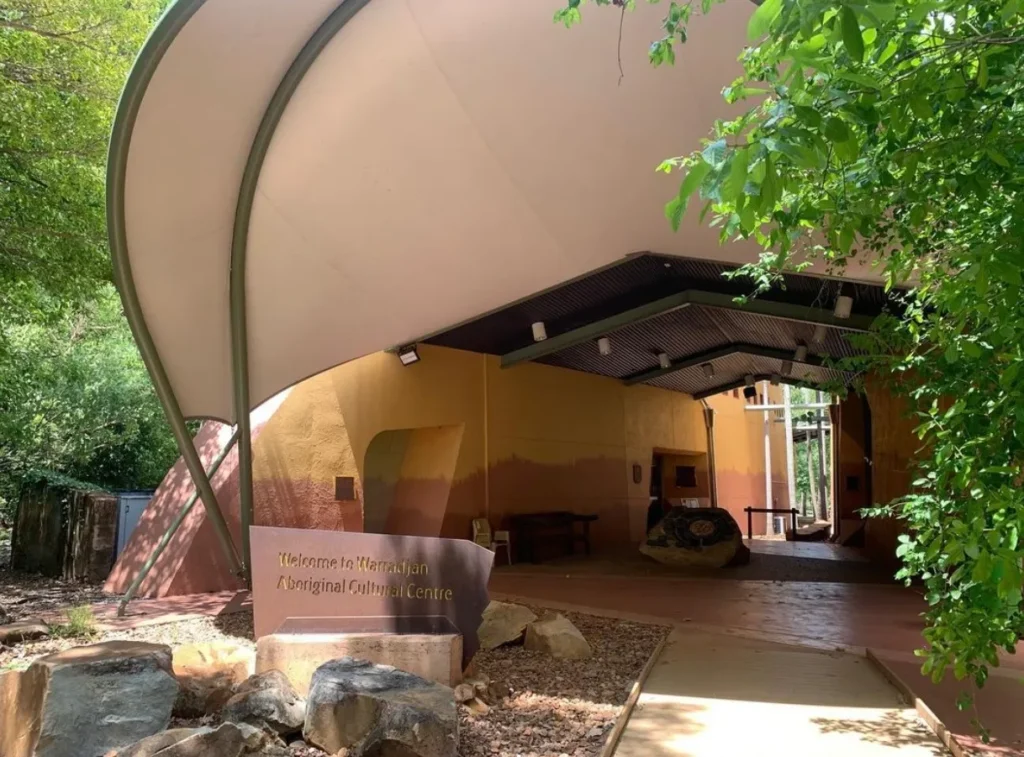
The original inhabitants of Kakadu National Park have lived in this region for over 50,000 years. Together with Parks Australia, they manage this national park. So why not learn more about the history of the Aboriginal people at the Warradjan Aboriginal Cultural Center?

If you stay at Cooinda Lodge in the national park, you’ll pass the turn-off anyway. The museum is well done. It tells and explains the life of the Aboriginals using many quotes and stories. You can also see many tools, art objects and everyday items of the Aboriginal people. 

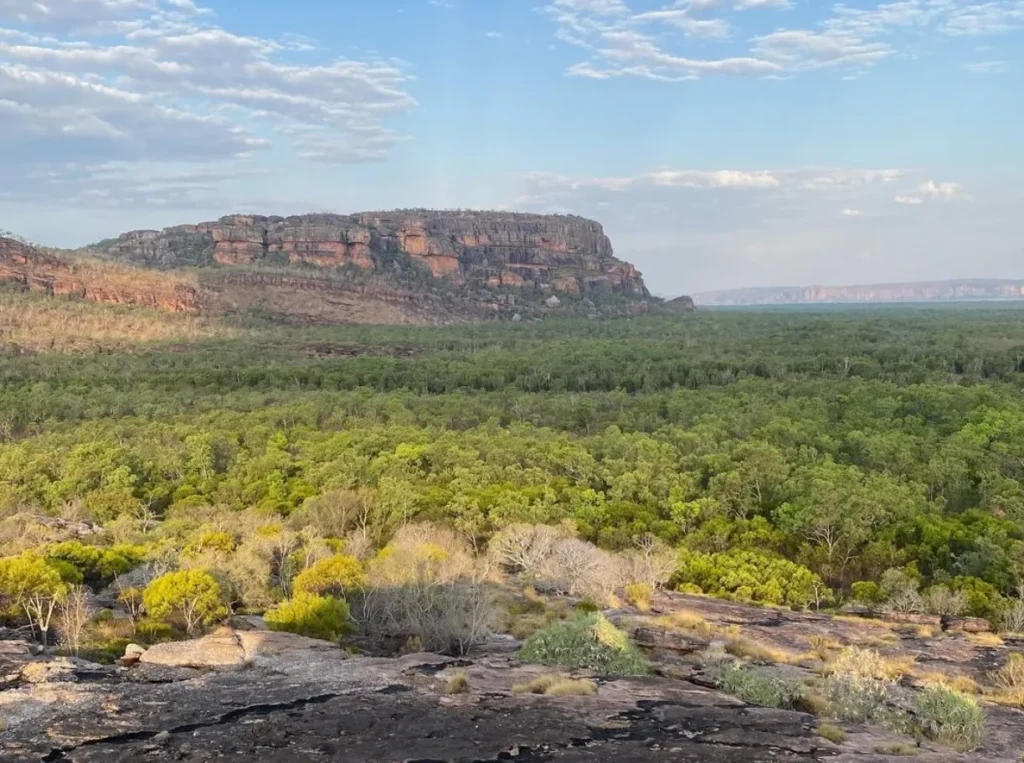
Nourlangie Rock (Burrunggui)

Nourlangie Rock

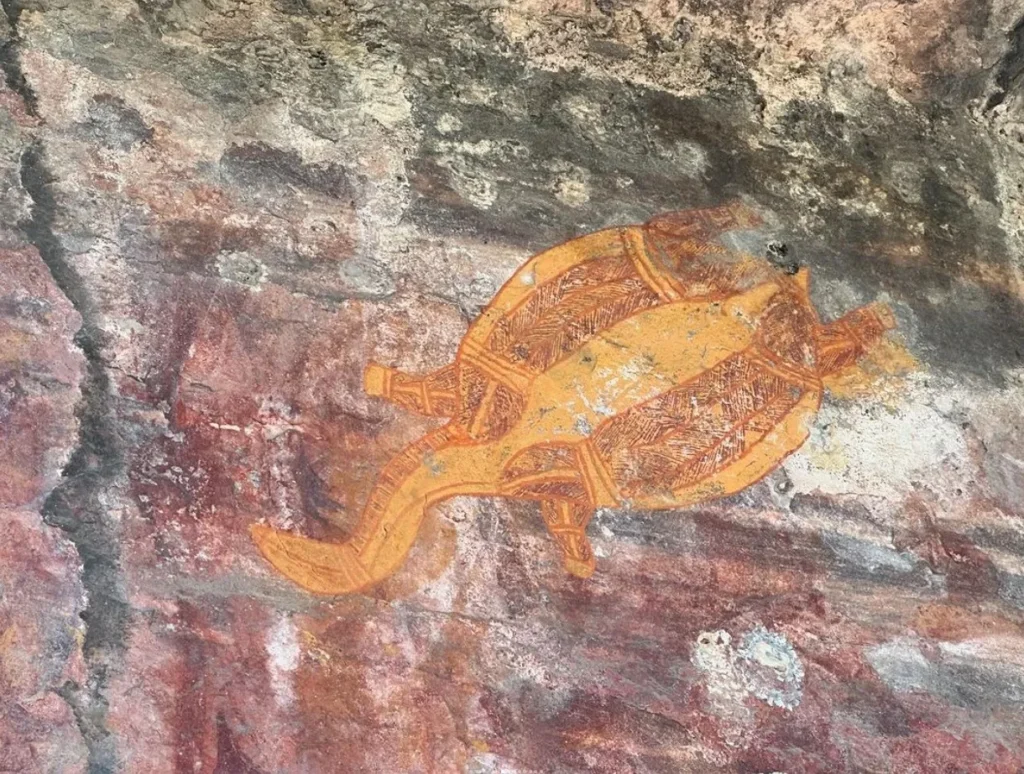
Along a 1.5 km circular trail at Nourlangie Rock (Burrunggui), you will pass many rock paintings that are several thousand years old. You can decide whether to join a guided tour led by rangers or explore independently. The rock art in Kakadu is one of Australia’s best Aboriginal art forms.

Here we take our time to read the panels carefully and marvel at the paintings.

Nawurlandja Lookout Walk

Nawurlandja Lookout Walk

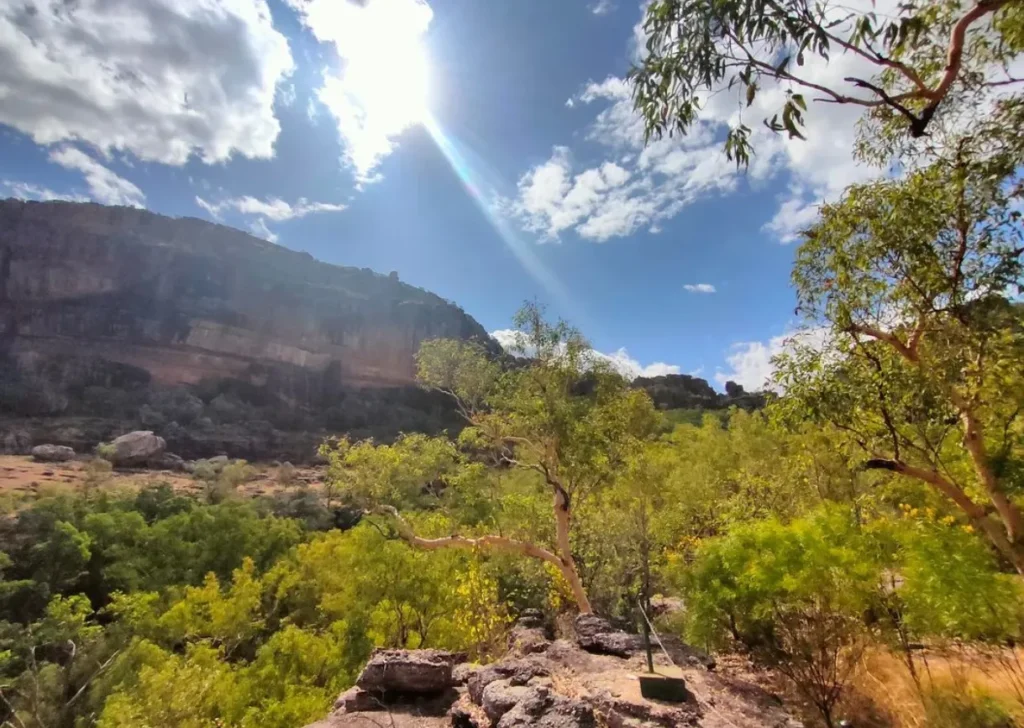
The Nawurlandjy Lookout Walk gives you an excellent view of Nourlangie and Angbangbang Billabong. You can go on guided walks led by park rangers or do the lookout walk alone. The rangers will tell you a lot about the rock paintings of the indigenous people, their stories, and the plants that grow here.


  • The tour is particularly beautiful at sunset.
  • Duration of the circular walk: 30 – 40 minutes.
  • Accessible all year round, both in the dry and rainy seasons. 

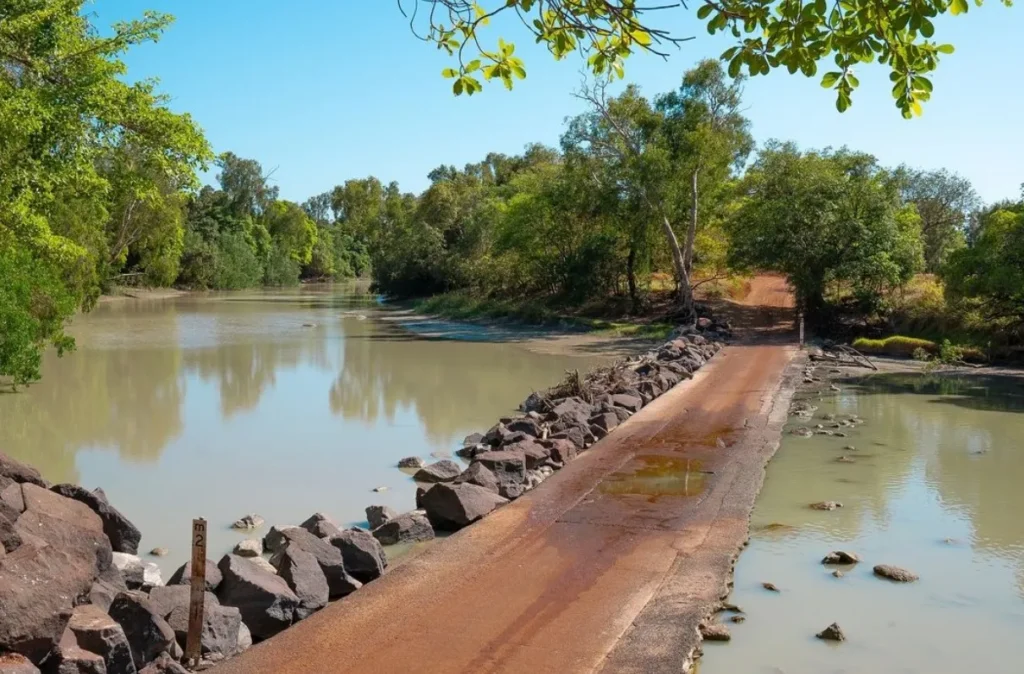
Cahils Crossing

Cahils Crossing

This legendary crossing to Arnhem Land is sadly famous. The strong current swept away a father and his car and the saltwater crocodiles did the rest. Locals crossing the road barefoot in the river were also caught and killed by crocodiles.

Be careful and do not cross the river on foot on the road, no matter how low the water is. Many Australian tourists were not too responsible during our visit. Also, watch out for the strong current.

You can see the road very well from the viewpoint. It is a spectacle for everyone. If you’re lucky, you can see saltwater crocodiles for free. 

See also  East Coast Australia

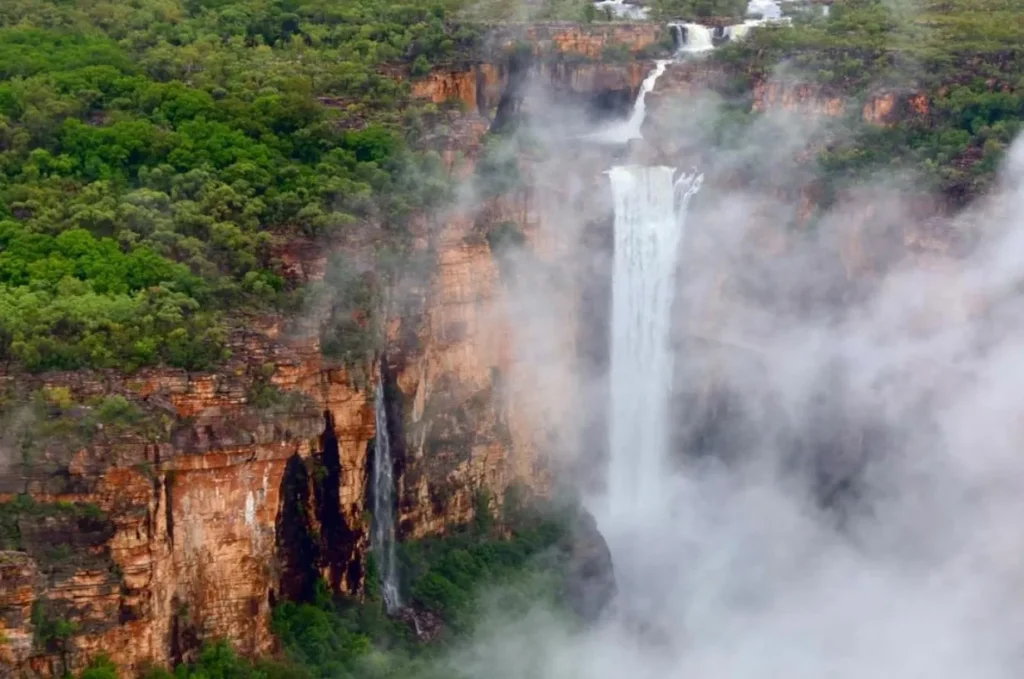
Jim Jim Falls and Twin Falls in Kakadu National Park

We could only see these spectacular waterfalls from the air on a helicopter flight. The road was still closed after the long rainy season. Alongside the rock paintings, they are the hallmark of Kakadu National Park.

You can hike, birdwatch, or swim in the water here. Check for crocodiles nearby.

You are also officially only allowed to drive a four-wheel drive vehicle. Alternatively, you can book tours at the visitor centre.  

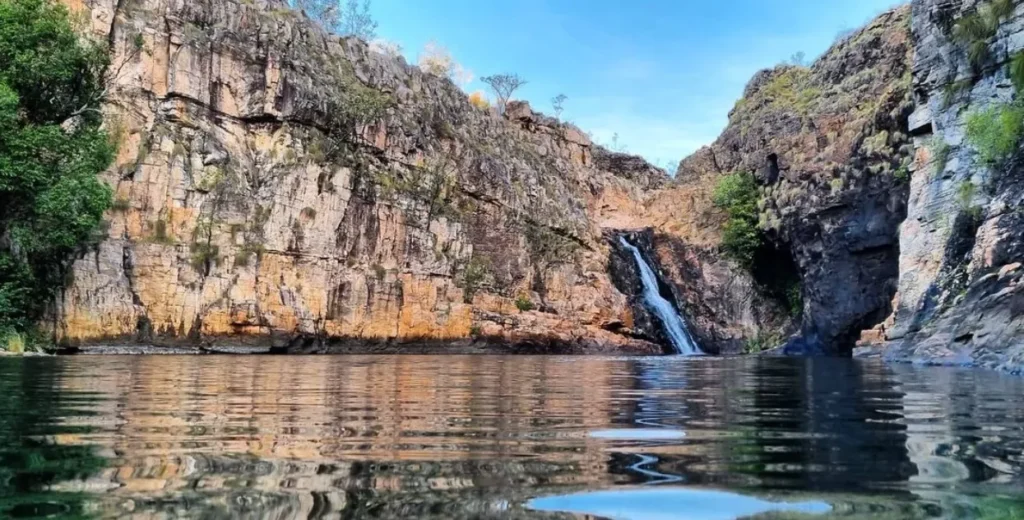
Gunlom Falls

Gunlom Falls

We would have loved to dip in the Gunlom Falls pool. Unfortunately, this road was still closed after the rainy season. The Gunlom Falls are often only open during the dry season, usually from April, but unfortunately, not even at the beginning of May for us, as it had rained a lot beforehand.

If you can, visit these waterfalls and enjoy the view over Kakadu National Park.

There is also a campsite here with a barbecue and solar-powered showers. 

Arnhem Land - a visit to the Aborigines


Arnhem Land is not technically part of Kakadu National Park. However, it is one of the few starting points for tours into the last territory of Australia’s indigenous people. Here, you can feel the endless expanses of the almost uninhabited land of the Aborigines.

You can only visit Arnhem Land as part of a tour, and thanks to a special permit, you can visit only the Injalak Arts Centre on your own.

We took the day tour “Arnhemlander Cultural & Heritage 4WD Day Tour“. We learnt more about traditional Aboriginal culture and customs and saw adventurous places and unspoilt nature. At the Injalak Arts Centre, we buy Aboriginal art directly from the artists.

More about the tour will be discussed in the next section.

Tours & Activities in Kakadu National Park

We have undertaken various tours in Kakadu National Park to experience its diversity. As this is not always possible on your own, we booked the following tours:

Arnhemlander Cultural & Heritage 4WD Day Tour

This tour is my absolute highlight in Kakadu National Park! The day trip to Arnhem Land, under Aboriginal administration, cannot be entered without a special permit, especially not individually.


The tour is variable and different every time, our guide guarantees us. Depending on the size of the group, visits to some places may or may not be permitted. We will visit the Injalak Art Centre. We also gain access to rock paintings that are only accessible to a few people (in contrast to Kakadu without fences), landscapes, sacred burial sites, and other important places for indigenous people.


These places make this trip to the Top End a truly unforgettable experience. Where can you see human bones lying around? Where do you walk untouched paths and make your way through tall grass in this beautiful landscape?

You can’t do this tour in the rainy season as the road at Cahils Crossing is often flooded more than .2 metres high.   

Scenic helicopter flights (without door)

The helicopter flight takes us from Kakadu National Park over the Arnhem Land Plateau, the waterfalls Jim Jim Falls, Twin Falls, and Double Falls, gorges, and wetlands. Even though the one-hour flight costs AUD 650 (“only” 450 euros), it is one of the most expensive tours. It is worth every cent. The view of the vastness and the plateau alone is priceless.

Then, the flight through the narrow gorge (unfortunately, without prior notice from the pilot, so I don’t have a photo of it. My jaw just dropped). First, we fly close to the treetops and up a slope. Suddenly, the flight over the peaks ends, and the endless expanse of the Arnhem Land Plateau opens up before us. The view is priceless. For me, one of the most spectacular helicopter flights to date and one of the best experiences I have ever had (and there have been quite a few).

See also  What Wines Are Famous in the Yarra Valley?

Note: This flight is available for only 250 AUD with a Cessna. The pilot can’t get as close to the rocks with the Cessna. It is also impossible to fly into the narrow gorge at Jim Jim Falls. That’s why we strongly recommend taking the expensive helicopter flight. A truly unforgettable experience and one of the highlights of our 3-month trip to Australia. 


Boat trip on the Yellow Water Billabong

Yellow Water Billabong

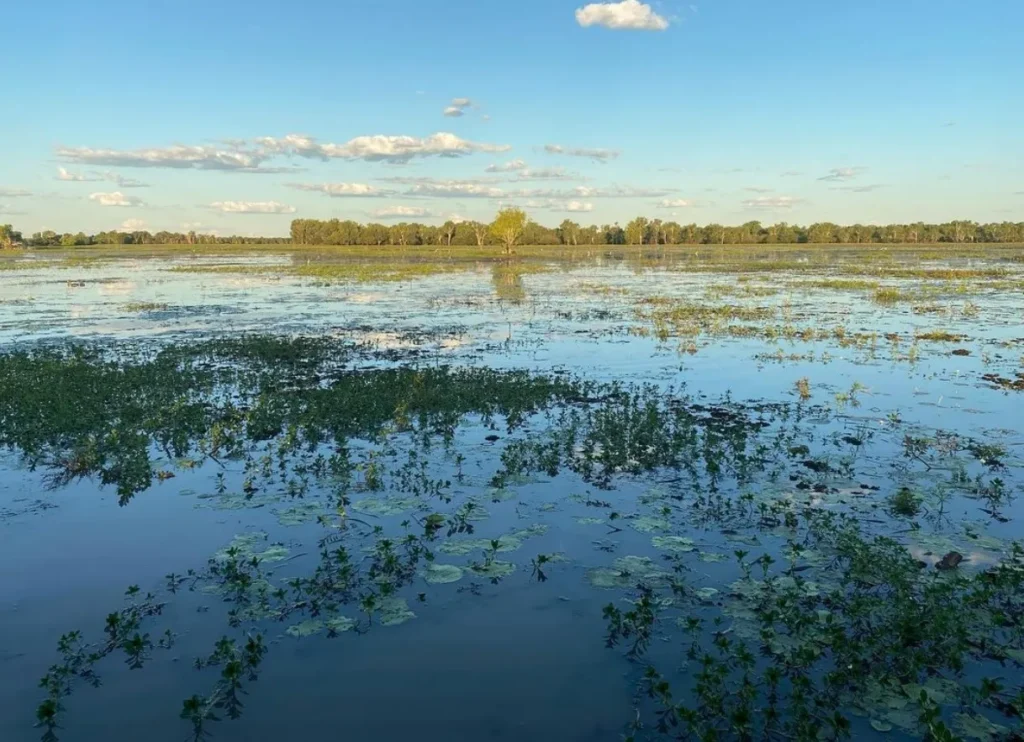
Take a boat trip through the wetlands on the Yellow Water Billabong River. Here, you are guaranteed to see giant crocodiles (“salties”) and quite a few bird species. This area is a paradise for birdies. The earlier in the day, the better, as the animals are most active early in the morning, and the crocodiles are still lying on sandbanks outside the Yellow Water Billabong. The salties are THE attraction in the Northern Territory and a must-see for all visitors.

Info: You can also take tours to shows around Darwin. We do not support these “types” of shows. Therefore, our tip is to come to Kakadu National Park and see the salties in their natural habitat. 

Guluyambi Cultural Cruise

Guluyambi Cultural Cruise

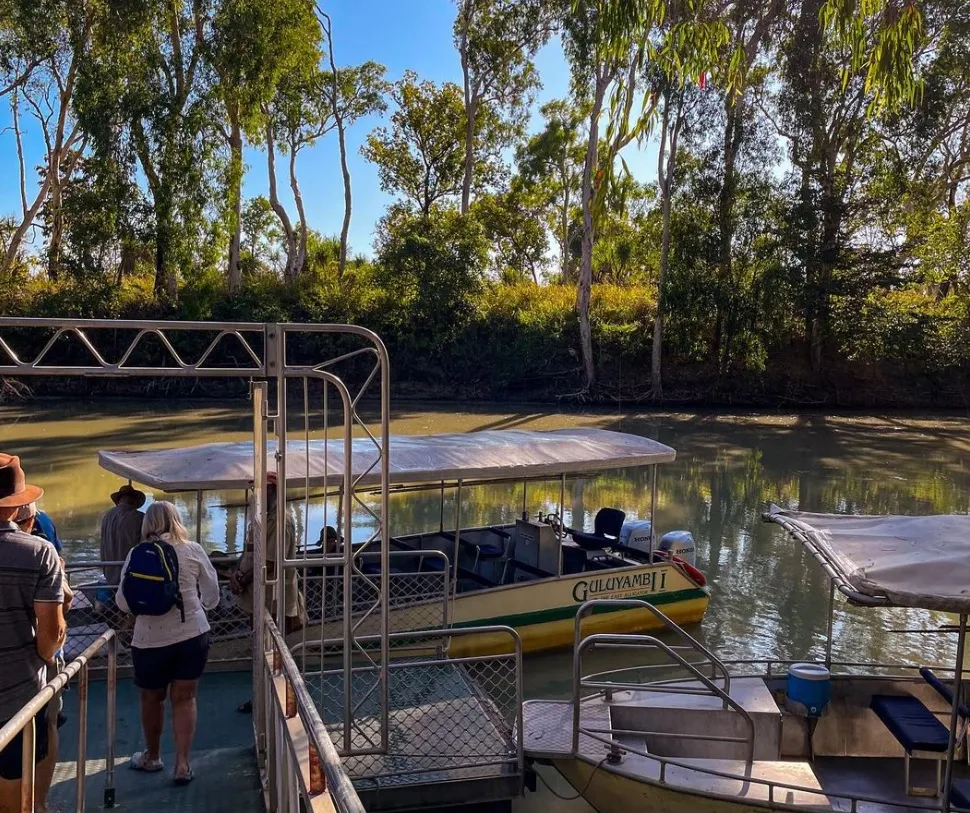
Take a boat trip through the wetlands on the Yellow Water Billabong River. Here, you are guaranteed to see giant crocodiles (“salties”) and quite a few bird species. This area is a paradise for birdies. The earlier in the day, the better, as the animals are most active early in the morning, and the crocodiles are still lying on sandbanks outside the Yellow Water Billabong. The salties are THE attraction in the Northern Territory and a must-see for all visitors.

Info: You can also take tours to shows around Darwin. We do not support these “types” of shows. Therefore, our tip is to come to Kakadu National Park and see the salties in their natural habitat. 

Useful tips & information

Entrance to Kakadu National Park

If you want to visit the park, you need a pass. You can purchase this on the Parks Australia website before travelling. The pass costs AUD 25 / AUD 40 for adults (families with 2 or more children AUD 65 / AUD 100) and is valid for 7 days. It can be extended to 14 days free of charge. The pass includes free ranger tours, ranger talks (highly recommended) and other cultural activities, which you can learn at the visitor centre (these change depending on the season).

Travelling to Kakadu National Park

Kakadu National Park (Jabiru) is about three hours from Darwin. From Katherine, it is 3.5 – 4 hours. From Litchfield National Park it is also 3.5 – 4 hours.

Refuelling and petrol stations in the park
Be sure to fill it out with Katherine or Darwin. Shortly before entering the park, the petrol pumps at the Mary River Roadhouse coming from Katherine were out of order. Coming from Darwin, the Bark Hut Inn Roadhouse was closed. This one looked rather deserted. There are three petrol stations in the park where you can get in. Cooinda Lodge Kakadu, the town of Jabiru, and the Aurora Kakadu Resort

Camping in Kakadu National Park

There are numerous campsites in the park. We looked for one with electricity. In Jabiru, we liked the Kakadu Lodge & Caravan Park campsite best. Cost: AUD 46 per night.

The campsite at Cooinda Lodge Kakadu was much noisier. Due to its location in the Wetlands, mosquitoes were also very numerous. The washrooms were not clean. Cost: AUD 41 per night

Accommodation in Kakadu National Park

Accommodation in Kakadu National Park

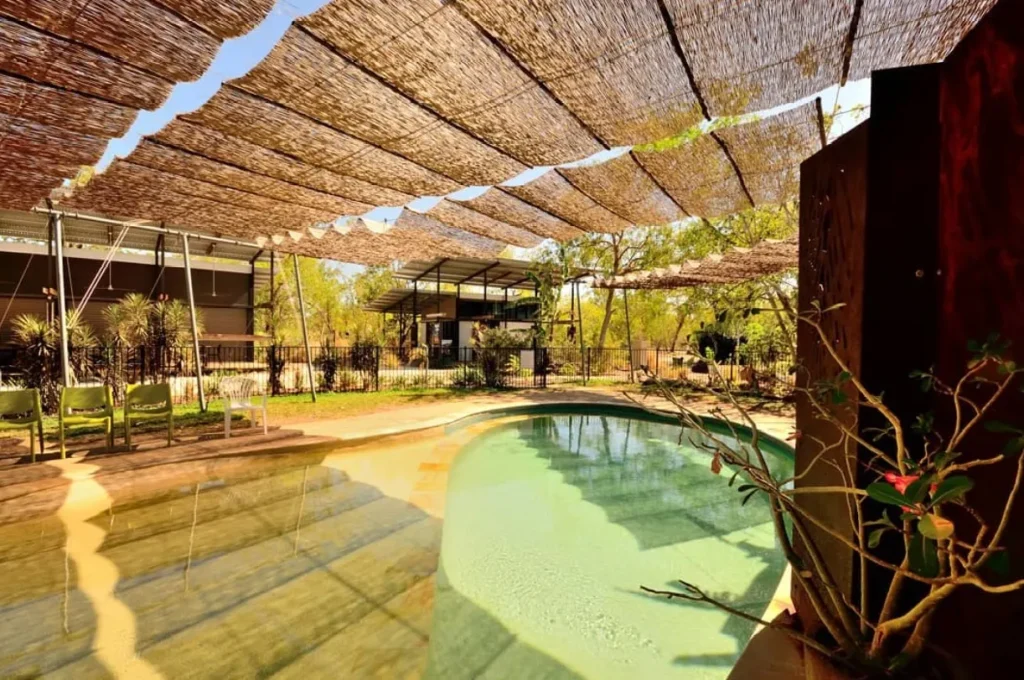
In Kakadu, we spent two nights at the Aboriginal-run Anbinik Kakadu Resort. This is where you’ll find the cheapest accommodation if you’re not travelling with a camper or motorhome. The huts have their own bathroom with an outdoor shower, a small terrace and cooking facilities next door.

Always in May: "Taste of Kakadu" festival

Always in May Taste of Kakadu festival

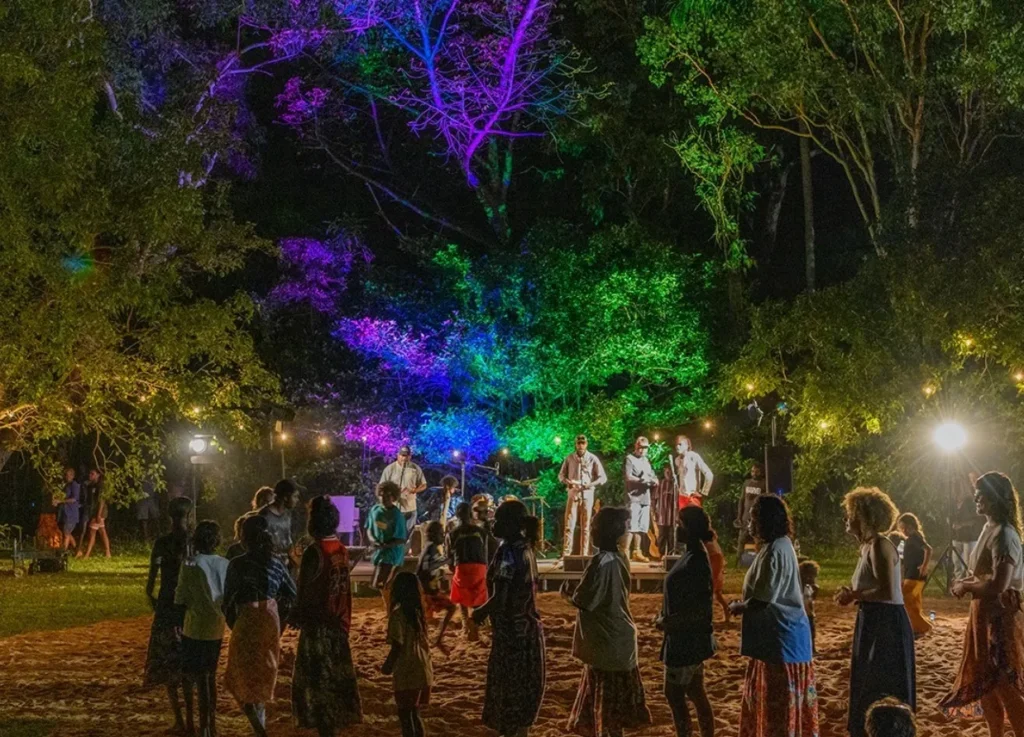
If you are in the park in May, you should visit a “Taste of Kakadu” event. We watched (and tasted) how Aborigines make fire and conjure up delicious dishes from plants and fish, and then we tried the food afterwards. It was super interesting! 

Best time to travel to Kakadu National Park

The North (Upper End) of the Northern Territory, where Kakadu National Park is located, often experiences heavy monsoon rains between December and March. Streets are flooded, so often not all places can be visited. Even in April and May, some slopes of Kakadu National Park may not be accessible.

Temperatures will be around 40 degrees then. Tours to Arnhemland are often not available. The road to Ubirr became passable shortly before our arrival in early May. The water was still about 30cm high (sometimes outside), but this was not a problem for our camper. As signs indicating closed roads are often incorrect (the road was closed anyway), we recommend visiting the National Park Information Centre and marking impassable roads on a region map. You can also get useful tips on the most important Kakadu attractions at the park centre. 

Popular articles
signs of roof damage
How To Know If A Roof Is Bad?

Most homeowners don’t notice anything’s wrong until a roof leak starts dripping through the plasterboard. That’s why knowing how to know if a roof is
Read More »